
NOA Now Summer 2026 Issue
We're kicking of Summer 2026 with a new Editorial Team, new interviews, a new pulse poll, and updates from NOA members across the states. Enjoy!
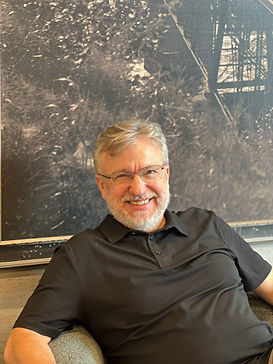


Welcome to the Summer Edition of NOA Now!
We are delighted to introduce ourselves as the new editorial team for NOA Now — Cynthia Stokes and Courtney Kalbacker.
We are excited about the upcoming year and look forward to building on the wonderful work that has already been established. Our goal for future issues is to create content that informs, inspires, and connects the opera community. We hope to highlight best practices from colleagues across the field, feature interviews with leaders in opera and opera education, and take in-depth looks at many of the important issues we face in the classroom, rehearsal room, and our local and regional communities.
Most importantly, we hope NOA Now continues to reflect the creativity, dedication, and collaborative spirit of our membership.
We would like to extend a heartfelt thank you to Ann Marie Daehn, who has been incredibly generous and helpful throughout this transition process. We are also deeply grateful to Jourdan Laine Howell, NOA Now Graphics & Layout Editor, and the NOA Now Team for their support, guidance, and enthusiasm. A special thank you to our contributors: Michael Ching, Kristen Clough, The Opera Journal Editors, J. Bradley Baker, Joshua May, and Sorrel B. McCarthy.
If you have ideas for articles, topics you would like to see explored, or an interest in joining the NOA Now committee, we would love to hear from you. Please feel free to reach out to us at any time.
And now, dear readers, we hope you enjoy this selection of articles — we have certainly enjoyed curating them to your interests!
HI.


A Note from NOA President Christopher Pfund
It is a privilege to recognize the extraordinary work of Cynthia Stokes and Courtney Kalbacker as they have taken the reins of NOA Now. The vitality, creativity, and dedication they bring to the publication continue to elevate the National Opera Association while fostering meaningful dialogue across our membership. We extend our sincere gratitude to Cynthia and Courtney for their outstanding leadership.
One of our ongoing goals is to continue shaping NOA Now into a publication that speaks directly to the broader opportunities and challenges facing our field—in classrooms, rehearsal halls, studios, and institutions alike—while maintaining a tone that is thoughtful, engaging, and reflective of the energy, generosity, and collaborative spirit that define the NOA community.
In this issue, we are especially pleased to feature Michael Ching’s interview with Brian DeMaris as he begins his new role as General Director and Principal Conductor of Arizona Opera, following his successful tenure as Head of Opera and Music Theater at Arizona State University. Their conversation offers meaningful insights into leadership, artistic vision, and the evolving landscape of professional opera, as well as the essential connections between the profession and opera education. Bradley Baker’s interview with Mo. Kathleen Kelly in the Coaches/Conductor Corner, offers insight into her artistic journey, and her singular approach to coaching singers.
I also encourage you to take part in our Pulse Poll—new this issue—and share what is on your mind. Your perspectives are vital as we continue working to make NOA Now a dynamic forum for the ideas, conversations, and issues currently shaping our field.
We look forward to honoring the accomplishments of our colleagues through a variety of profile articles, including a feature in this issue on composer Robert Chauls from the Young People’s Opera Committee. Celebrating the work of our members remains central to our mission of fostering a vibrant and supportive community.
In addition, you will find opportunities to reconnect with colleagues through features such as Kristen Clough’s notes from The Opera Journal, Joshua May’s news from our regional governors, and additional highlights from across the organization.
This edition also introduces a refreshed format, including new tile-based navigation designed to help you quickly access the articles and features that matter most to you. We are also excited to launch a new short-form video series highlighting practical ideas and best practices shared by colleagues from around the country.
Thank you for your continued engagement, creativity, and commitment to our shared work. Together, we ensure that NOA remains a thriving, forward-looking community.
.01

"I love opera. I like difficult things."
Brian DeMaris, interviewed by Michael Ching
NOA member Brian DeMaris is finishing up his first year as President and General Director of the Arizona Opera. Founded in 1971 in Tucson, the company performs its season in Phoenix and Tucson, with board members and staff split between the two. Like many arts organizations nationwide, the Arizona Opera was facing serious challenges post-COVID which were causing frequent debt and a stay-at-home audience. The result was a shrinking calendar of productions, which had gone from a height of five down to two.
When he was offered the position, despite being a tenured full professor at Arizona State University, Brian took the leap. He felt called to help.
Brian: Spending 20 years in the business, teaching and conducting, you sort of start to see what effective leadership looks like. We can spot someone who's doing something for themselves versus doing something for others. And I just think the only way to survive as an arts leader right now is to do it from a place of service and calling. I don't think our current arts economy could provide any other possible route to success.
With Brian’s leadership, Arizona Opera instituted some personnel changes. The staff has moved from remote work to a more face-to-face model. All staff are now Arizona based, most in Phoenix and some in Tucson.
I asked Brian about the differences between running a university opera program and a professional company and he said:
Brian: I always thought that we could do so much more inventive, exciting, and unique programming in academia than an opera company could.” “We weren’t dependent on ticket sales. Everything I did, from [The] Marriage of Figaro to Notes on Viardot, people really loved. They would come to see things because they trusted that what we did would be well-executed and enjoyable and a quality piece, as well as supporting the students.
He hopes to push the envelope at the Arizona Opera, noting that the next season’s announcement of El Gato Con Botas, a chamber opera by Montsalvatge in their black box space, has sparked a surprising great deal of interest.
One positive difference between a move from a university to a professional company that he didn’t expect was the schedule:
Brian: I now eat breakfast and dinner with my family every day. And that wasn't the case when I was teaching or conducting. Even when I was in town teaching, I would go weeks without that. You know, we had late night rehearsals and I wouldn't see them for dinner and I'd sleep in in the morning by the time they were off to the bus because I was burnt out. So I conducted less and less at ASU and supported students and guests in conducting more as I, as my kids got busier and I prioritized seeing them, but it was a huge adjustment to wake up, eat breakfast, get the kids out, take the dog for a walk and drive to work for a nine to five job.
Having also been a General Director of a professional company myself, we shared the joy that opera introduces you to fascinating and talented opera lovers. I told him about the doctor on my board at Opera Memphis who had done the first and last tuberculosis surgeries in Tennessee.
Brian: That's the most enjoyable part of the job. I'm meeting so many different people that I didn't meet as a conductor, people with fascinating skill sets. Fascinating people who are as fascinated about opera as I am about learning more about what I don't know–about things other than opera.” For example, “Our board treasurer is a multiple times [The] New York Times bestselling author on the art of negotiation and likens negotiation to the martial arts.”
.02
%20WEB.jpeg)
Image: Brian DeMaris, General Director of Arizona Opera
It was inevitable that we talked about AI, which is on everyone’s mind.
Brian says: I'm looking forward to seeing how AI effectively moves opera forward because I think it will happen. I don't know if it'll be on the administrative business side of it or if it's in the artistic product. I don't know necessarily that you're going to see it in video imagery. I could see it becoming incredibly effective in lighting and stage operations, mechanics, basic technology–enhancing but not replacing. It seems to me right now the audience isn't ready for it to replace any sort of human craft.
He recalled the company’s 2025 concert production of Aida, which, although supplemented with AI scenery, ultimately relied on spectacular operatic characterization and singing.
Brian: Jennifer Johnson Cano was singing Amneris, and in her final scena, she performed so incredibly well. And no one was in costume. She just really created a space and inhabited it in the old school consummate performer kind of way. In the end, what mattered was the incredible artistry offered by the singers.
I told him about going to a restaurant in Amsterdam where the dessert was brought to the table by a robot. What might have seemed cute a few years ago now seemed a bit... sinister.
Although his schedule has changed his availability for guest conducting, Brian is still interested in continuing to share his experience and passion for opera with the NOA community. (Take note, NOA colleagues...)
Brian: Especially with how competitive opera is, I think there's an urgent need to help students to navigate criticism, for lack of a better word, feedback. Students don't know what to do with it. And then teachers, sometimes the easiest thing is to not give it directly. And that doesn't really help. What I think can happen is young singers will go out into the world and things won't happen because they're not getting the feedback, or they'll suddenly get really harsh feedback where they're least expecting it and not know what to do with it, not know how to navigate it. If I went back to teach today, I would challenge myself to figure out how to do that in a constructive and healthy way.
As mentioned earlier, Brian has learned lessons from master negotiator Cash Nickerson and would love to share how negotiation is such a valuable skill throughout an artist’s career, both for the business side, but also on the collaborative/artistic one. With one foot in the profession and one foot in the academy, Brian says, “I would also spend a lot more time teaching certain realities of the business, and making sure that students who are investing all that time and money–or their parents' money–to really understand what that competition looks like and what the expectations are. And I think it needs to be quite a bit more audience focused and a bit more donor focused. So that's not quite so personal.”
%20(Photo%20credit%20Tim%20Trumble%20Photography)_WE.jpeg)
Image: Brian DeMaris at Arizona Opera's Midnight Masquerade Gala, 2025. Photo credit: Tim Trumble Photography)
Brian is still inspired by the gift that is singing and opera.
Brian: I don't think we artists always fully recognize each day how special what we have is—and we're surrounded by other people who are just as special. They can sing just as well and perform just as interestingly and have all the skills and the knowledge, and we kind of get each other and understand each other.
But the people beyond that–the audience, they don't get that and don’t take it for granted. So when someone comes to their home and sings six feet away from them, it's transformative and magical and amazing and the best part of their day. And we don't always fully recognize that.
So I'd probably try to get my students out there more around people who just are like, wow, how do you do that? How do you sing in another language? It's the most common question. Do you know all the languages you sing in? It’s probably best to keep them, [the audience], amazed.
I began our zoom call by asking Brian how he liked being a General Director. He threw the question back at me. Given what we’ve been through recently, I easily admitted that it looks harder now than when I ran Opera Memphis in the 90s and 00s. COVID and the divisive political climate have made it much harder. Brian says that most of the current Arizona audience and supporters are able to find common ground at the opera. Next season, he’s testing the political waters with Derrick Wang’s Scala/Ginsburg.
Brian: I thought long and hard about doing Scala/Ginsburg, but everybody loves it. People cheer when Ruth comes in and they laugh at Scalia and that's the way it's written. And it doesn't matter which side of the aisle they're on, they love it. In fact, we're partnering with the Sandra Day O'Connor Institute because she was a Supreme Court Justice from Arizona. They said, “just send it to us” because they have to make sure it’s nonpartisan, and they love it.
I have known Brian for a long time. In fact, I conducted his first professional job, when he played Carmen when I conducted it at Opera Festival of New Jersey in 2000. My favorite part of our conversation was when he summed up the risk, responsibility, and reward involved in taking on the position at Arizona Opera.
Brian: I have nothing to hide. And if there's some huge public failure or it doesn't work out or it's month eight and the company closes, I'm the one that ended up here. I'm the one they picked. I'm the one that was willing to fall on my sword. And I felt like I was sort of in a position with the support of my family and being ingrained in this community to give it the best shot. So it was sort of a willingness to fail on a higher level. And I love opera that much, I love opera. I like difficult things.
Thanks to a donor in Tucson, the Arizona Opera is going to breathe a tiny bit easier because of a $10 million dollar bequest. The breathing room that provides, along with the current mandate to propose a balanced budget every year, is going to give Arizona Opera the chance to thrive, grow, and adapt in the 21st century. I know that all of us at NOA wish Brian DeMaris and the Arizona Opera every success.

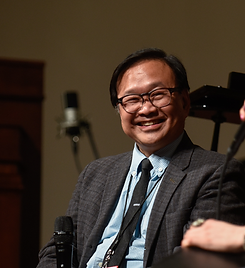
Coach/Conductor Corner: A Conversation with Mo. Kathleen Kelly
Coach/Conductor Corner is a new feature of NOA Now that brings readers into conversation with distinguished conductors, coaches, and pianists from across the opera industry. The series is designed to provide practical insight and professional guidance drawn directly from leading artists in the field. To suggest a future guest or contribute ideas for the series, please contact J. Bradley Baker.
About Kathleen Kelly: Kathleen Kelly’s practice combines her skills as pianist, coach, conductor, writer, and advocate. During the 2025-26 season, she joined both Jamie Barton and Ryan McKinny in recitals, led the Texas premiere of Notes on Viardot for Baylor Opera Theater, and returned to the New National Theater Opera Studio in Tokyo to lead performances of Gianni Schicchi. She also introduced the groundbreaking Collaborative Piano Playbook for the International Keyboard Collaborative Arts Society with co-author Elvia Puccinelli.
Recent notable projects include her chapter on current industry practice for Chanda Vanderhart’s book Accompaniment in America, her acclaimed recording Force of Nature with soprano Emily Albrink, and her performance in the filmed opera Interstate. Her international performing credits include appearances at Wigmore Hall, Weill Hall, Zankel Hall, the Kennedy Center, Spivey Hall, and Vienna’s Musikverein. She has been part of the musical teams at the San Francisco, Metropolitan, Houston Grand, and Vienna State Operas, and is a regular guest coach for the New National Theater Tokyo Opera Studio. Her work has been published in VAN Magazine and The Journal of Singing. She is the Director of the Vocal Studies Division at Baylor University.
___________________________________
Brad: Kathy, thanks for spending some time! Let’s begin by talking about coaching techniques that you feel have been especially effective.
Kathleen: The most interesting part of coaching for me is partnering with a vocalist to identify what they already do, and what steps to take from there. What is their relationship to pulse? to their ear and intonation? to language? Coaching is the process by which we develop techniques to gain skill, mastery, and ultimately maximum flexibility in rhythm, intonation, and expression.
Singers can apply that flexibility and subtlety to anything. Working in this partnered way can develop the kind of artistry in which a singer working with other musicians can bring a highly refined understanding of their relationship to the total harmony, to ensemble vowel sounds, and to pulse. An artist with real granular understanding of their role within the whole can manipulate any one of those elements in the service of expression.
I’m always blown away when I hear singers who can do this, especially with rhythm and pulse—we don’t talk enough about it in classical singing! I admire people who can sing slightly ahead of the beat to increase vitality, excitement, or tension, or slightly behind the beat to create an atmosphere of reluctance, sadness, grief, or fatigue. Many artists treat intonation unintentionally, but there are singers who can absolutely choose to sing on the upper side of pitch in order to ratchet up tension, or slightly below pitch to communicate a doleful affect. Or perhaps they intentionally scoop into a pitch for an expressive reason—I love to talk about portamento as late 19th-century ornamentation! Ultimately, all these expressive devices can be broken down into basic building blocks: rhythm, harmony, pitch, and timbre. The joy of coaching for me is helping singers turn those building blocks into expressive technique.
Brad: How has your understanding of coaching changed over the course of your career?
Kathleen: When I began, what I primarily saw coaches doing—something that has been especially important in opera, particularly in North America—was communicating the performance traditions of the repertoire, and refining language. And we needed that in a nation with so few live performances relative to the population. The traditions did need to be taught, and language did need to be refined. Also, the coaching I saw was all within big opera house machinery—very git-er-done—and I learned so much from expert coaches who could just get right down to brass tacks and help people do the thing.
It can be very challenging for musicians to find time for granular work, particularly in a house where coaching is applied punitively, or where the music staff is stretched to their limit—I wish both of those things were rare. The least interesting—and potentially most toxic—kind of coaching can arise when you only have time to say, “this is the right answer.” The kind of coaching I love has time to say, “I’m your partner in building your full instrument, which includes your unique mind and ear.” And if we can take time for this, it changes all the other conversations down the road. We have to make time.
Brad: What you’re describing is developing a refined sense of pitch, timing, and how your individual artistry relates to the whole: that an E-natural is not always the same E-natural, for example. A pitch can be slightly sharp or slightly low, or it might even change over the course of being sustained.
Kathleen: Right! Tuning to A440 or turning on Dr. Beat—great tools, but they’re just tools. Pitch and rhythm are more diplomacy than anything else. You think of the greatest, most independent artists—someone from opera like Maria Callas, or from pop music like Barbra Streisand—and how intentionally they use their relationship to pulse as part of the emotional landscape they inhabit. I think that’s worth analyzing.
These days, the entire process of rehearsing has become so truncated. It’s ever more difficult to find room for the kinds of conversations I’m talking about.
Brad: I think academia is where that can happen, because we have time to explore, within an artist’s developmental stages, how to activate this mindset in our students.
If you’re trying to cultivate that mindset within a production setting, there often just isn’t enough time for artists to fully engage with it, or for that exploration to be truly helpful. In some ways, it can even become detrimental because there’s so little time to develop the refined hearing and subtle artistry needed to unlock its full potential.
Do you find this subtle approach helpful in the case of diction as well? Is this something that changes depending on geographical location?
Kathleen: I’m old enough to remember diction courses before IPA (shocker!). When I was studying at Arizona State, there were voice teachers just starting to use this newfangled IPA, and others who had sung in Europe who would say, “These symbols aren’t the thing, you have to listen to learn what the language is like.”
I would say both are right. Obviously, the symbol is not the sound, but the symbol is a gateway into a granular understanding of sound—like notated pitches and rhythms can’t tell you everything about how to play, but they sure are helpful starting places!
I often think about William Bolcom discussing his representation of vernacular speech rhythms. He said that early in his career he realized that the more precisely he tried to represent the exact rhythms of speech, the further performers moved away from actual vernacular speech because the focus became execution of his notation rather than communication. What he said next was such a masterclass moment for me: “so I did what all the great vocal composers have always done. I wrote the simplest rhythm that was closest to what I wanted and then trusted people who know the language to do the right thing.”
Brad: That’s wonderful, and it parallels the idea that diction is not about symbols, but about looking through the symbols toward language itself and the communication of ideas.
Kathleen: I agree. I think we can sometimes get lost in the weeds there. But I also think that, particularly in North America, young coaches are often placed in positions of authority—the person at the piano becomes “the corrector,” “the rule-bringer,” the person who says whether something was done well or poorly. Young coaches I work with talk about feeling that pressure, and young singers express a pressure to defer to pianists. So even if that paradigm isn’t communicated directly, it’s clearly being passed down.
It was communicated directly to me. One of my mentors said, “You’re the pianist. You don’t get to make mistakes.” Another said, “Never admit that you’ve made a mistake! No one hires someone who doesn’t know their stuff.” What insurmountable pressure to put on someone who is still learning the profession. Coaches and collaborative pianists have a learning curve, even if our profession rarely supports it.
Back to language: in North America we are generally behind the rest of the world linguistically. Basic pronunciation is only the first step toward putting language into a lyric instrument, which is a completely different physical process. But basic pronunciation is where we must start. Ultimately, singers need coaches who understand more than that. It all takes time.
This is a very different conversation in Europe. Depending on where you are and whom you’re talking about, there can be a great tolerance for foreign accents—and often, the opposite is true. It’s such a local conversation. In Vienna, I often heard auditions with my two bosses—one a native German speaker and the other a native French speaker and they would hear American singers perform in those languages and remark, “They don’t understand a word.”
I knew that wasn’t literally true. What they were missing, I think, was a kind of personal investment: the shaping of emphasis and nuance, the communication of something deep and personal that didn’t solely rely on the composition. I did start to wonder in Vienna if American singers’ concern with getting pronunciation “right” might stand in the way of that kind of expression. Not that I’m against excellent pronunciation!
Brad: Yes, I agree. There is something palpably different when an artist truly understands how a phrase must be delivered to communicate. You referenced one of opera’s greatest communicators, Maria Callas, and I am certain she would wholeheartedly endorse the wonderful ideas you have shared with our readers.
Thank you so much for sharing your expertise, and for all you have done—and continue to do—to inspire us all to greater heights.
.03


Composer Profile: Robert Chauls at 83
Composer Robert Chauls was a member of the NOA board of directors (1985-1994) and chair of the Chamber Opera Competition 1984-1990. Now 83 years old, he has dedicated his life to music as a pianist, composer, conductor, and educator. His career reflects a lifelong dedication to opera education, artistic mentorship, and the cultivation of new generations of performers and audiences.
A long-time professor of music at Los Angeles Valley College, Dr. Chauls is also the author of Piano for Adults, An Aural Approach. His first opera, Alice in Wonderland (available from Wise Music) was the second most performed contemporary opera in America in 1981-82, and has continued to be performed across the U.S., Germany, and Poland for more than 40 years. Chauls wrote the libretto for Alice in Wonderland himself, adapting the work from Lewis Carroll. The opera is designed to be flexible and practical for schools and smaller opera companies, with reduced orchestrations and a minimum of just 4 solo singers required. The score blends lyrical tonal writing, humor, and theatrical pacing intended to appeal to both children and adults. Paul Houghtaling shares a fond reminiscence of one of these performances:
“I first became familiar with Robert Chauls in the fall of 1986 when I was cast by Boston Lyric Opera as the Mad Hatter in his opera Alice in Wonderland. We performed it on Boston’s First Night series which celebrated music and theater on New Year’s Eve. It was sponsored in part by Opera America and the most wonderful part was the collaboration with the Boston’s Theater for the Deaf. Each sung role also had an [ASL] signer and it was lovely to be a part of. There were no music-writing computer programs in the 80s, so I still have Robert’s hand-written score.”
In addition to Alice, Chauls also composed several other humorous and engaging twisted fairytales including The Trial of Goldilocks and The Magic Rhyme. Details of instrumentation, storyline, and publishing rights to all three of these works are available in the Young People’s Opera Project Database.

Image: The Mad Hatter (Paul Houghtaling), Alice in Wonderland at Boston Lyric Opera, December 31st, 1986.

Image: Sketch of Robert Chauls created from photo from Guild Opera company website.
.04
In addition to his work with NOA, Dr. Chauls was on the Board of Directors of Guild Opera of Los Angeles and has been on the musical staff of City of the Angels Opera, Portland Opera, AIMS, Lake George Opera, and Des Moines Metro Opera. He also served as judge for the Metropolitan Opera Auditions and as a panelist for the National Endowment for the Arts. Despite his vast and varied musical experience, when asked to describe his career, Dr. Chauls gave us a one-word answer, “Pianist!” During our interview with him, he shared that he began formal music training at age six (initially on accordion) and “started composing when I was eight,” writing songs and preserving early pieces in a personal archive. He explained why children’s opera appealed to him simply: he “just picked up the book and...thought, this would be cool.” Chauls is clearly centered on the audience and performer experience and is an educator at heart. Chauls taught for decades at Los Angeles Valley College and other institutions— alongside ongoing composing and coaching projects. He ran intimate home concerts and local productions for years, turning living rooms and dining areas into salon-style performance spaces for 30–35 attendees. He values working with dedicated students: he prefers “a hardworking person with even a lesser instrument” to a gifted but uncommitted performer. In addition, he repeatedly emphasized the positive influences of his collaborators (directors, librettists, and singers) on his musical journey.
Dr. Chauls’s career exemplifies a sustained commitment to opera education, mentorship, and the development of future generations of performers and audiences alike. May we all be fortunate enough to enjoy artistic lives spanning more than eight decades like Dr. Robert Chauls.

Introducing our New Industry Pulse Poll
NOA Now will be featuring a poll or survey in each of our editions as a way to reflect upon current issues important to our readers. In this edition we will be featuring a survey from one of our members which specifically involves opera directors and conductors.
Dr. Caitlin Vincent, a researcher at the University of Melbourne and the author of OPERA WARS: Inside the World of Opera and the Battles for its Future, is running a large-scale career survey of conductors and stage directors working in the opera industry. The aim of the project is to better understand different career paths in the field, as well as the skills that are most needed to secure work opportunities and succeed artistically in the room.
Follow this link if you’re interested in participating in the survey.
.05
Caitlin Vincent
Caitlin is an award-winning librettist, trained vocalist,
opera company director, and arts commentator.
She holds a PhD from Deakin University,
an MM in vocal performance from Peabody Conservatory,
and a BA in history and literature from Harvard.
(Photo credit: Ruth Schwarzenholtz Photography)

The Opera Journal: New Horizons in Opera Research at NOA
Like many at our national conference in Boston this past January, I was inspired by the calls to action presented there. NOA serves the operatic field as a place for bold voices to gather and the conference reminded me how intertwined all our practices—performance, creation, scholarship—are in this uniquely inter-disciplinary craft. The Opera Journal editorial team was pleased when Executive Director Kirk Severtson agreed to allow us to publish his Welcome Remarks in our Autumn/Winter 2025 edition of the journal. Seeing these remarks side-by-side with the scholarship and reviews in the journal highlights the goals of The Opera Journal: to foster a space for scholarly engagement and conversation among all operatic practitioners, to enrich operatic practice and performance through study, and to examine how opera’s past and present can lead us into its future.
The research found in the issues we have published in the past year is a clear reflection of those goals. For example, musicologist and composer Navid Bargrizan proposes an illuminating post-dramatic framework, drawn from theatre scholar Lehmann, to offer new insights into the works of Harry Partch and Manfred Stahke. Lucy Li, musicologist and pianist, probes the historical dissonances present in Mussorgsky’s Boris Godunov crafting a nuanced reading of the opera’s considerations of myth and reality. Past Executive Editor Joshua Neumann, explores operatic fandom through three recording case-studies, including a look at his ongoing project on recordings of Die Winterreise featuring Deitrich Fischer-Dieskau. Nicole Steinberg, musicologist, considers four presentations of the Pountney-Engels production of Weinberg’s The Passenger to examine how each institution reframed Holocaust memory based on its own sociocultural and political context.
As we move forward, the team is looking to expand the role of our journal, publishing increasingly interdisciplinary research and supporting a greater diversity of authors. These values reflect our editorial team’s own broad research interests: including reception studies, digital and media cultures, opera’s role in nationalism, feminist and post-colonial studies, and a time-range spanning music from the medieval period to today. See our group biography for more.
If you are interested in publishing with the journal, you can reach out to our new Journal Administrator Kimberly Soby. Be on the lookout for upcoming updated guidelines to reflect our expanding vision of operatic research.
—Kristen Clough, Executive Editor
Expanding Coverage in our Reviews
As you may have noticed, the reviews section of The Opera Journal has been growing lately. I hope our new direction reflects something that connects with your interests! In our last two issues, we have covered productions at the Washington National Opera, the Komische Oper Berlin, the Pensacola Opera, and the 2025 Aix-en-Provence festival, and new books such as Joseph Attard’s Opera Cinema, Megan Steigerwald Ille’s Opera for Everyone, and the composer Leonard Lehrman’s autobiography.
In the future, we’re looking to publish reviews of live productions, academic conferences, and of any media associated with opera—books, recordings, filmed productions, and critical editions of scores, as well as online resources related to opera. For live, filmed, and recorded productions, things that are new, rare, or seem historically significant will get priority. We recently published a review of Jake Heggie’s Three Decembers (2008)—a "new” work for The Opera Journal because we had not previously reviewed anything by Heggie. A review of Mason Bates’s The (R)evolution of Steve Jobs was historically significant because it analyzed the way that Bates’s opera reflects national values.
If you are interested in reviewing for The Opera Journal, please fill out the reviewer interest form. We especially need reviewers for productions in cities such as Boston, Chicago, and Los Angeles. If you have feedback on a review that you enjoyed, you can email me directly.
—Matthew Franke, Reviews Editor
.06


The Opera Journal Editorial Team
In addition to Kristen Clough and Matthew Franke, the following serve on the Editorial Team:


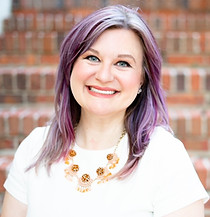
Regional Activities and SNOA Charter Chapters
Throughout the spring, I have been working to meet with the Regional Governors to discuss their on-going regional activities, plans for hosting or collaborating on a conference in our upcoming cycle and discussing how best to initiate our upcoming opera peer to peer adjudication program for 2026-2027. We hope to provide our members with some exciting regional activities to promote getting to know new members, sharing resources, and providing adjudication to faculty colleagues through this initiative spearheaded by our Great Lakes Region.
I encourage our members to reach out to me or your Regional Governor to get involved with planning activities to building community together. Regions have started to create new ways to connect throughout the year like virtual social hours, newsletters, and discussions on how to share resources for production planning together! These opportunities help provide a great welcome to new members and build community for everyone to get to know more about the upcoming opera productions, special events, and unique goals of each region to support our NOA mission.
Our executive board have been working on all the incoming charters for the first year of our new Student NOA chapters. We welcomed two new chapters at the University of Florida and the University of South Carolina this spring with their official charters! I encourage all our members to consider starting a SNOA chapter at your university/college program with your students. It is a great way to provide professional development, leadership opportunities, and share in opera education for your campus community. If you’d like to get started, you can review the application information at National Opera Association - Student NOA Chapters (SNOA).
Here are some of the activities SNOA Chapters across the country are planning:
Gavin Gallagher, University of Florida SNOA Chapter President:
"Our SNOA chapter allows students the opportunity to take charge of their education and professional development. As a student organization, student government funding is available to us to make it possible to create new opportunities for performance and education. For example, our chapter held an aria showcase performance in the community as well as a showing of La bohème that included a short educational presentation created by one of our students."
Grant Ebert, University of South Carolina SNOA Chapter President:
"I hope to continue to foster the love for opera in every student that is part of this chapter. Whether that's by singing arias and scenes, or watching Met broadcasts as a group, we strive to learn about as many operas as possible. Additionally, finding time to prepare ourselves for our own performances utilizing workshops that other members have provided us."
Read more about the charter chapters of SNOA under Gavin and Grant's leadership.
.07
