

Winter 2025 Issue

The Team behind your Winter 2025 Issue
Ann Marie Wilcox-Daehn, Editor & contributor
Isai Jess Muñoz, contributor
Stella Markou, contributor
Carleen Graham, contributor
Patrick Hansen, contributor
Jenny Madruga Chavez, contributor
J. Bradley Baker, contributor
Shelby VanNordstrand, contributor
Joshua May, contributor
James Haffner, contributor
Jourdan Laine Howell, Editorial & Graphics Designer

A Letter from the President
A forward by Isaì Jess Muñoz, President of NOA
Dear Esteemed Members and Friends of the National Opera Association,
As I complete my term as President of the National Opera Association, I find myself reflecting on the extraordinary resilience, imagination, and generosity that define this community. These past two years have tested and transformed us, yet our shared passion for storytelling through music — and our unwavering belief in the power of opera to move, connect, and inspire — have never wavered.
This winter edition of NOA Now beautifully reflects that vitality. Within these pages, you’ll encounter artists and educators whose creativity continues to expand the reach and relevance of our art form. Jenny Madruga Chavez introduces the Young People’s Opera Works Database — part of NOA’s growing Young People’s Opera Initiative — opening new pathways to engage the next generation. Shelby Van Nordstrom and Joshua May preview the National Conference’s student track on audition preparation and career development, while Nicole Kenley-Miller and Ann Marie Wilcox-Daehn illuminate the deep connection between movement, embodiment, and collaboration in opera.
Patrick Hansen contributes an insightful piece on “The Many Faces of Workshopping New Opera,” reflecting on the vibrant renaissance of contemporary opera. He reminds us that composers and librettists no longer work in isolation but can now shape new works collaboratively through the creative workshop process — something he champions at Opera McGill. James Hafner continues his exploration of Chekhov’s influence in Harnessing the Power of Atmosphere, and Carleen Graham highlights innovative curriculum at the Manhattan School of Music that reimagines singer training and professional development. Pianist Bradley Baker’s conversation with Madelin Morales, last year’s Argento Competition winner, offers a glimpse into how artistry evolves beyond accolades. We also celebrate the visionary Peter Sellars, whose lifetime of groundbreaking work reminds us that creativity flourishes when courage meets imagination. Stella Markou’s reflections on his legacy underscore opera’s limitless potential to respond to our world with empathy and insight.
As NOA continues celebrating its 70th anniversary year, we do so with gratitude and momentum. Guided by a clear strategic direction and energized by your engagement, NOA continues to grow as a vibrant, inclusive hub for collaboration and innovation. Much of this progress happens quietly — in committees, classrooms, and conversations — but together, it has propelled us toward a bold and responsive future.
Looking ahead, we gather this January in Boston for our 71st Annual Conference, Bold Voices, Boundless Futures — the culminating celebration of our 70th anniversary and the 30th anniversary of NOA’s Legacy Project Initiative. We will honor Peter Sellars, along with our Lift Every Voice Legacy Honorees Gail Robinson-Oturu, Clifford Jackson, and Denyce Graves. The conference will feature stellar breakout and plenary sessions, the New Works Expo, and the finals of our numerous competitions.
It has been the honor of a lifetime to serve as your president and to help steward this extraordinary community into its next chapter. May this edition of NOA Now renew your sense of purpose and possibility. Let us keep creating, believing, and building the bridges that will carry opera boldly into its future.
With gratitude and admiration,
Isaí Jess Muñoz
President, National Opera Association
From the Field
Down the Rabbit Hole with Peter Sellars
by Stella Markou

Venturing into the extraordinary world of Peter Sellars, NOA's upcoming Lifetime Achievement Award recipient, I quickly became Alice tumbling down the rabbit hole. I peered through a chaotic kaleidoscope of sounds, stories, ideas, and creative cohorts woven into a dazzling mosaic. With each turn, a vast artistic sphere emerged — one of a bold and boundless voice. Sellars’s voice has undeniably transformed theatrical history and laid a dynamic foundation for its future. I found myself lost in the countless facets of his work, each filled with inspired perspectives and worlds of endless possibility. As I lift my teacup to the Mad Hatter of the operatic world, I invite you to take a brief jaunt with me down this rabbit hole.
Sellars's decades-long career has been gilded with prestigious honors and collaborations with a juggernaut roster of revolutionary creatives and institutional titans. At the soul of his work, however, lies a deep commitment to exploring profound human issues: basic human rights, racism, inequality, war, identity, social justice, compassion, political oppression, marginalization, and universal humanity. Through innovative reinterpretations of classical works and new commissions, he creates powerful platforms to illuminate these themes.
It's impossible to encapsulate the breadth of Sellars's creative output and contributions to the field. The following is a concise selection of artistic milestones that illustrate his remarkable scope and impact:
-
Sellars brought radical, modernized stagings to Mozart's Don Giovanni, The Marriage of Figaro, and Così fan tutte, reimagining them within contemporary social and political contexts.
-
He directed the world premiere of John Adams's Nixon in China, revolutionizing contemporary opera by integrating historical narrative with political commentary, and Adams's The Death of Klinghoffer, a bold exploration of complex political and human themes that sparked international dialogue. The two went on to collaborate extensively on numerous landmark works.
-
He partnered with Sir Simon Rattle on major productions with leading orchestras and festivals, blending theatrical innovation with musical excellence.
-
He commissioned and directed new works by composers including Tan Dun, Philip Glass, and Kaija Saariaho.
-
He served as artistic director for major institutions and festivals, including the Boston Shakespeare Company, the American National Theater at the Kennedy Center, the Los Angeles Festival, the Adelaide Festival, New Crowned Hope, and the Ojai Music Festival.
One of Sellars's greatest legacies is the countless individuals and generations he has inspired, mentored, and advocated for. On collaboration — the essence of his theatrical existence — he remarked in a 2010 interview with Simon Halsey "...there's nothing more beautiful than collaborative work… we are all saved from our own ideas by the other people in the room or our own ideas get so much richer because somebody else adds something you would never have thought to add."
Among Sellars's collaborative artists, I was fortunate to speak with acclaimed American tenor, director, and educator Carroll Freeman, who not only performed Don Ottavio in Sellars's groundbreaking production of Don Giovanni but also sat beside him at the premiere of Nixon in China. Listening to Freeman recount his experiences with Sellars was fascinating and brought me closer to this "enfant terrible" beyond my voyeuristic internet stalking. Speaking with Freeman also deepened my understanding of Sellars, allowing me to see him not only as theiconoclastic visionary but as a human being. Of the tea I am permitted to spill, Freeman offered the following insights on working with Sellars:
"His face is a sunbeam – all the time. Just beaming, and I never saw anyone smile so genuinely. It was an openness – his eyes were so big, taking in every drop of inspiration. You couldn't believe that anyone could be that bright and that encouraging. He has the courage to do what’s needed to be done. It is because Sellars knew every word of everyone and could tell you what every instrument in the orchestra did, at exactly what time and how it related to the story and your character. He was incredible that way. Sellars would welcome you to do what you wanted as a performer; however, he had a remarkable way of convincing you to do what he fashioned. That said, he would always listen to you and would let you find your way. He had an incredible gift, and that was to give you the confidence to explore and to have permission to find something deeper as a performer and not just go to the first or easiest choice. He changed me as a performer and director. He was tireless and joyous, bouncing off the walls and was the most intelligent director I have ever worked with."
Like the brilliant Mad Hatter, Sellars continues to transform the musical world into a radical playground where impossibilities become art. In Alice's Wonderland, such an irrepressible figure would be reason enough for a celebratory gathering. But “Bold Voices, Boundless Futures” — NOA's take on a tea party (fittingly in Boston) — would be "very unmerry" indeed without you. So don't be late for this very important date as we come together to celebrate, connect, and chart the path forward for our vibrant, boldly multifaceted community.
À bientôt

Stella Markou
Professor of Voice and Opera, University of Kansas
NOA in Boston

Be Bold or Go Home: Expanding the Paradigm for Singer Professional Development
by Carleen Graham
We asked Carleen to share a bit about what we can expect from her session at NOA and what inspired it. Enjoy and we hope to see you all in Boston!
During my five years at MSM I am witnessing an increasing urgency from industry leaders, emerging singers, current students, and now, faculty and administrators about the need for collegiate voice programs to seriously examine and redefine their goals, learning objectives, and curricula. While the very purpose of higher education is being attacked, it, combined with significant changes in in the performing arts industry provide unique opportunities for educators to approach professional development, curriculum revision, and student/alumni success in bold and collaborative ways.
Over the course of my 35+ year career in higher education and the performing arts, I have been fortunate to develop a network of remarkable artists, educators, industry leaders — many who are former students or colleagues from various parts of my life. I am grateful to several of them who have agreed to be interviewed. It would be easy for me to speak about the exciting changes happening at MSM, but more importantly, hearing from others will provide a more fulsome perspective with ideas that might inspire or benefit a broader range of academic situations. I will also share Manhattan School of Music’s current work to engage faculty, students, and alumni in the process of reflecting on the educational experience at MSM and to prioritize specific curricular, programmatic, and artistic goals for the next three to five years and is serving as a school-wide model for other Divisions.
I’m honored to have been selected to present at the next NOA Conference in Boston — where my artistic journey really began, and to meet, catch up with and learn from everyone who makes NOA one of the very best organizations in higher education professional development. Please join me and all our amazing colleagues for what will truly be an inspiring, rejuvenating, and memorable time.

Carleen Graham
Dean, Division of Vocal Arts & Collaborative Piano, Manhattan School of Music
Expert Corner

The Many Faces of Workshopping A New Opera
by Patrick Hansen
We’re in a most amazing moment in the creation of new opera. It seems there’s a world premiere happening every weekend all around the globe! How exciting for new opera, and for the new voices creating these libretti and operatic scores.
Back in the day (meaning my formative years in the business in the 80s and 90s), this was not the case. I remember only a handful of new operas — Lee Hoiby’s The Tempest at DMMO in 1986, Judith Weir’s A Night at the Chinese Opera at Santa Fe in 1989, John Corigliano’s The Ghosts of Versailles at the Met in 1991, Carlisle Floyd’s Cold Sassy Tree in 2000 at HGO, and the BIG one — Mark Adamo’s Little Women in 1998 also at Houston Grand Opera. Now these are just a few, truth be told, of the many new operas that happened then. However, those two decades simply do not hold a candle to the renaissance of new opera that we find ourselves in.
During the first quarter of the 21st century, many new works were being created through much more involved, integrated, and interconnected workshops that became integral to the actual creative process. Opera companies discovered the theatre world’s dramaturg. No more did a composer and librettist create a new opera in a vacuum and then send off the score to a company that — hopefully — might put together a group of singers to “hear” how it went. (I won’t name titles but how many of us have sat in premieres and thought, ‘surely they needed a dramaturg to help wrestle this story into coherence?’) Luckily, the great and wondrous trend now is to Workshop pieces with a capital W!
This includes starting with the libretto and working a piece in miniature — either a portion of an act or even a few scenes. My training program, Opera McGill, at the Schulich School of Music in Montreal has been workshopping new pieces since 2018 both at McGill and across the pond at the Guildhall School of Music and Drama in London, England. At last count, we’ve workshopped over twenty new pieces in the last eight years.
We’ve partnered with a Montreal-based group, Musique 3 Femmes, who created a prize in 2018 for new opera created by women librettist and composer teams. Under their leadership, they’ve workshopped and brought to completion dozens of new Canadian operas telling stories about women, written by women specifically for sopranos and mezzos. My students have been quite lucky to be involved in this process, which brought together new creators who may, or may not have had, experience writing opera. The M3F team created a process to include multiple workshops over months. This allows new creators to digest the feedback from not just the leadership teams, but also the artists and students involved in these workshops. It led to many full-length operas being completed and then produced all around Canada and Europe.
At Opera McGill, we’ve also been workshopping new operas written by composers who have had more experience writing for voices and for the operatic genre. Recently, Luna Pearl Woolf’s The Limit of the Sun with a libretto by Andrea Stolowitz was given two years of mini workshops that concluded with a semi-staged performance of the completed Act One. Prolific Canadian composer Dean Burry’s Il giudizio di Pigmalione had a day-long libretto workshop so that he could refine ideas that resulted in our producing the world premiere of the complete opera in 2022. One of the Musique 3 Femmes workshop operas, Anna Pidgorna’s and Maria Reva’s Plaything was produced by Opera McGill on the same evening as Dean’s opera conducted by Jennifer Tung and directed by Sheree Spencer.
But the most interesting workshop I’ve ever been involved in happened a few years prior to the pandemic. A young English composer, James Garner, and I entered into a partnership to create an operatic version of Shakespeare’s Much Ado About Nothing. As the librettist, I wanted to make sure that I was adapting Shakespeare’s texts without adding words of my own, but that came with numerous challenges. James had written a number of one acts, (East o’ the Sun, West o’ the Moon which Opera McGill produced in 2018) but had not tackled a full-length two-act opera. I enlisted the help of McGill’s great Shakespeare scholar, Paul Yachnin, who had a brilliant idea: put the creators into a room with twenty-one other people and workshop the libretto and the score, but only one scene.

Photo: Much Ado About Nothing Workshop
Twenty-one people is a lot. Why twenty-one? The scene to be workshopped involved seven characters, so we needed seven singers. Four flew over from McGill, the other three were from Guildhall (which magnanimously hosted the three-day workshop). In addition, we wanted seven trained Shakespearean actors to double the seven singers, so seven amazing young actors from the drama school were found. Paul’s other brilliant idea was to put seven research specialists in the room — scholars who specialized in everything from Shakespeare to Women’s studies to Early Modernity, to one of the great musicologists from Cambridge. It was daunting for James and myself to even walk into the room.
We’re in a most amazing moment in the creation of new opera. It seems there’s a world premiere happening every weekend all around the globe! How exciting for new opera, and for the new voices creating these libretti and operatic scores.
Back in the day (meaning my formative years in the business in the 80s and 90s), this was not the case. I remember only a handful of new operas — Lee Hoiby’s The Tempest at DMMO in 1986, Judith Weir’s A Night at the Chinese Opera at Santa Fe in 1989, John Corigliano’s The Ghosts of Versailles at the Met in 1991, Carlisle Floyd’s Cold Sassy Tree in 2000 at HGO, and the BIG one — Mark Adamo’s Little Women in 1998 also at Houston Grand Opera. Now these are just a few, truth be told, of the many new operas that happened then. However, those two decades simply do not hold a candle to the renaissance of new opera that we find ourselves in.
During the first quarter of the 21st century, many new works were being created through much more involved, integrated, and interconnected workshops that became integral to the actual creative process. Opera companies discovered the theatre world’s dramaturg. No more did a composer and librettist create a new opera in a vacuum and then send off the score to a company that — hopefully — might put together a group of singers to “hear” how it went. (I won’t name titles but how many of us have sat in premieres and thought, ‘surely they needed a dramaturg to help wrestle this story into coherence?’) Luckily, the great and wondrous trend now is to Workshop pieces with a capital W!
This includes starting with the libretto and working a piece in miniature — either a portion of an act or even a few scenes. My training program, Opera McGill, at the Schulich School of Music in Montreal has been workshopping new pieces since 2018 both at McGill and across the pond at the Guildhall School of Music and Drama in London, England. At last count, we’ve workshopped over twenty new pieces in the last eight years.
We’ve partnered with a Montreal-based group, Musique 3 Femmes, who created a prize in 2018 for new opera created by women librettist and composer teams. Under their leadership, they’ve workshopped and brought to completion dozens of new Canadian operas telling stories about women, written by women specifically for sopranos and mezzos. My students have been quite lucky to be involved in this process, which brought together new creators who may, or may not have had, experience writing opera. The M3F team created a process to include multiple workshops over months. This allows new creators to digest the feedback from not just the leadership teams, but also the artists and students involved in these workshops. It led to many full-length operas being completed and then produced all around Canada and Europe.
At Opera McGill, we’ve also been workshopping new operas written by composers who have had more experience writing for voices and for the operatic genre. Recently, Luna Pearl Woolf’s The Limit of the Sun with a libretto by Andrea Stolowitz was given two years of mini workshops that concluded with a semi-staged performance of the completed Act One. Prolific Canadian composer Dean Burry’s Il giudizio di Pigmalione had a day-long libretto workshop so that he could refine ideas that resulted in our producing the world premiere of the complete opera in 2022. One of the Musique 3 Femmes workshop operas, Anna Pidgorna’s and Maria Reva’s Plaything was produced by Opera McGill on the same evening as Dean’s opera conducted by Jennifer Tung and directed by Sheree Spencer.
But the most interesting workshop I’ve ever been involved in happened a few years prior to the pandemic. A young English composer, James Garner, and I entered into a partnership to create an operatic version of Shakespeare’s Much Ado About Nothing. As the librettist, I wanted to make sure that I was adapting Shakespeare’s texts without adding words of my own, but that came with numerous challenges. James had written a number of one acts, (East o’ the Sun, West o’ the Moon which Opera McGill produced in 2018) but had not tackled a full-length two-act opera. I enlisted the help of McGill’s great Shakespeare scholar, Paul Yachnin, who had a brilliant idea: put the creators into a room with twenty-one other people and workshop the libretto and the score, but only one scene.

Patrick Hansen
Director of Opera Studies, McGill University; Artistic Director, Tri-Cities Opera
YPO Works
Building Bridges for the Next Generation: The Young People’s Opera Works Database
by Jenny Madruga Chavez

From elementary to high school, opera designed for young audiences has been an essential part of the growth and awareness of opera. This year, the National Opera Association’s Young People’s Opera Project (YPO) has published a significant new resource that amplifies and expands on this mission: the Young People's Opera Works Database, an authoritative list of operas written for young people.
A Legacy of Advocacy
The YPO Initiative’s new project draws on a rich legacy. Many readers will recall Opera for Youth, the pioneering directory compiled by Emily Hammood in 1977. Hammood's publication was the guiding reference for decades, providing insight for a stream of educators, composers, and opera producers looking for repertoire appropriate for young voices and audiences. At a time when such works were often scattered, obscure, or recognized only within localized circles, Opera for Youth brought focus and visibility to the category.
The fresh YPO Works Database draws direct inspiration from that legacy. It is a modern continuation of Hammood's work, but with an expanded vision: to create an increasingly dynamic, living database capturing the energy of opera for young people. The database knows that youth opera is no longer a limited number of classic works but instead is an increasingly diverse repertoire with new commissions, re-purposing, and cross-genre pieces emerging every year.
What the Database Offers
The YPO Works Database provides practical, detailed information on operas designed for pre-college performers and audiences. Each entry includes:
-
A summary of the work, offering a concise overview of story and themes.
-
Practical production details such as cast size, vocal requirements, and orchestration, allowing educators and directors to assess whether a piece fits their ensemble.
In short, the database is designed to be both scholarly and practical: a tool for researchers, but also a working resource for those making programming decisions in classrooms, community programs, or professional opera companies with youth initiatives.
Why It Matters Now
The publication of this database comes at a perfect time as more and more opera companies, schools, and community programs across the United States and worldwide seek ways to engage new generations meaningfully and sustainably.
For school directors, the problem is usually finding music that serves musical integrity and accessibility. For composers, the problem is visibility: pieces are written, premiered, and then all too often lost to memory unless they are catalogued and disseminated. For students, repertoire can inspire imagination, promote self-expression, and bridge classical traditions and current issues.
YPO Works Database addresses these issues with a practical catalog and platform to amplify opera for youth.
A Living Resource, Shaped by the Field
Perhaps the most exciting aspect of the database is its cooperative nature. The Committee completed an extensive search for young people’s opera across all possible resources, in addition to encouraging NOA members and YPO Committee members to submit entries to the database. Through this research and collaboration, the YPO Works Database has grown to over 100 entries for scholars and producers of opera to use when programming for young audiences.
Looking Ahead
The YPO Works Database is still in its early stages, but its possibilities are enormous. With every new submission and every new review, the resource becomes stronger, more representative, and more useful to the industry. In the end, it will be both a list of works, and an account of the evolving relationship between opera and young people.
When we commit to telling stories with and for young people, we are committing to keep the art form alive, vibrant, and a reflection of the human experience. The Young People's Opera Committee invites teachers, composers, and practitioners to explore the database, contribute to its growth, and become part of the larger endeavor of creating opera experiences for young audiences.
The mission of the YPO committee is to create and cultivate the production and creation of opera by and for students prior to college, and to offer a forum for exchange, performance, and creation. The YPO Works Database represents an important step towards bringing that vision into being.
The YPO Works Database can be found here.
To submit a work for the database, fill out the form here.
Jenny Madruga Chavez
Opera Singer, Teacher, Social Media Manager, Graphic Designer

On The Stage
Embodied Movement for Opera Singers — A Chat with Nicole Kenley-Miller
by Ann Marie Wilcox-Daehn
Nicole Kenley-Miller and her colleague Rebecca Herrin will be presenting at NOA's 2026 Conference in Boston with a session titled, “Embodied Movement for Opera Singers.” I think this kind of collaboration is one of the things we do best at NOA, so I reached out to learn more.
AWD: How did you meet your dance colleague, Rebecca Herrin? How did you begin your collaboration?
NKM: This is my third year at the University of Oklahoma as the Opera Stage Director. I met Rebecca Herrin my first year when we hired her as choreographer for The Merry Widow, otherwise known as, "that show where opera singers have to dance!” The first thing I noticed when I started at OU was that, like most university opera programs, the curriculum did not contain any movement or dance, and therefore the singers were not only challenged by dance steps and choreography, but they struggled to understand how to move their bodies on stage in general. To that end, we knew that we couldn't just dive into teaching them the waltz. We decided to hold a couple of movement workshops for the cast prior to the start of staging, so that we could assess their inherent level and style of movement and introduce them to some basic concepts about how to move through space, such as passive vs. active physicality. These workshops then progressed to the entire cast learning the waltz and a select group learning a Charleston routine for the opening of Act 3. Realizing that a couple of movement workshops was not the long-term solution to the problem, we have continued our collaboration to explore concepts created by Valerie Hunt in her Movement Behavior Analysis (and later adapted by Sally Fitt and Thomas Haygood) to address the unique needs of opera singers. This will be the topic of our presentation at the conference in Boston.
AWD: How do you think the dance and movement training has benefited your students?
NKM: The challenge we face when training singers for the stage is that most of them arrive to the opera track via choir, which is very much a stand-and-sing discipline, unless they are involved in show choir or their high school's musical. Add to this the fact that the opera industry has gone through phases throughout its history of more highly valuing the execution of the music over the execution of the drama and movement (thankfully this is changing in recent decades), and you have a perfect storm of singers who arrive to the university with little to no background or resources for how to move on stage. This conversation becomes not just about dancing and choreography, but more importantly about how we are training our singers to move through space, how to shift their weight, and how to inhabit the physicality of the character while singing highly technical music. Also, how are we to accomplish that when singers arrive to our university programs in their late teens and early twenties with such little movement experience?
That said, even though this training arrives late on the scene for most of our students, it is extremely valuable in giving them the tools and confidence they need to realistically portray these characters. For our students, it has taken an area of performance that is often anxiety-inducing or confounding and made it seem more attainable, because it originates from what they already do naturally. It has given them an understanding of how much more energy they need to bring to the stage, and it has improved both their acting and their singing across the board.

Photo: Rebecca Herrin

Photo: University of Oklahoma, The Merry Widow
AWD: How has the collaboration with Rebecca expanded your options as a director?
NKM: I have learned so much from Rebecca that has changed the game for me as a director. Most importantly, her adaptation of the Movement Behavior Analysis language for application to opera singers has given me a vocabulary to help my singers feel empowered by how they naturally move rather than defeated by what they don't know or haven't ever been taught. This vocabulary has given me specific language that communicates more clearly to my singer-actors and demystifies what I am asking them to do, because it is related to how they understand their own movement style.
AWD: We had the opportunity to see some fantastic movement from your singers in their winning scene from The Merry Widow at our last convention. I noticed that you’re doing The Turn of the Screw this fall. How does the movement training help your students with this style of opera?
NKM: I was particularly proud of the singer-actors who performed The Merry Widow scene in competition last year, because they represented all levels of experience as movers and a dynamic spectrum of body types as well. I think they proved that opera singers do not have to look a certain way or have a certain background of training to move effectively on stage. I believe that this is a particular stigma in our industry that needs to be addressed. All types of bodies are able to move and convincingly portray diverse types of roles with training and direction, if we do not impose traditional stereotypes in our casting.
Our current season features two serious operas that involve very little, if any, dance — The Turn of the Screw and La Clemenza di Tito. However, movement training is equally as important for the cast in portraying these serious characters. This training impacts how the character makes any movement, from walking across stage, to sitting in a chair in a corset and bustle, to collapsing to their knees in grief, to skipping with a stick horse, or to making an entrance that shows off the regal drape of their toga. Awareness of one's body and how the body moves through space is not just related to dance routines and choreographed numbers. It is at the very heart of our responsibility as actors to authentically portray characters and tell the human story of these operas.
AWD: What is your best piece of advice for anyone looking to expand movement offerings in their opera curriculum?
NKM: I would advise anyone who works with young opera singer-actors to explore options for training yourself first, so that you can begin to introduce these concepts in your own direction and teaching. Whether it is taking a movement class for the first time, or brushing off skills learned in a movement class you took years ago, your students need this training from you in rehearsals. They need it to develop confidence in their own performances on stage, and they need it to set themselves apart in a saturated market of auditions and competitions. It will not only transform their performances on the dramatic side, but it will also activate their singing in ways that might not be addressed solely in the voice studio.
Above all, don't be afraid to program scenes or shows that have movement. Avoiding it is the surest way for nothing to change. The simple act of getting your students moving, at whatever level, is valuable in their development. While we have been able to revise our graduate curriculum at OU to supplement their training with movement and dance classes, this is understandably not an option for all programs. But with very little or no funding, you can introduce basic concepts of movement by inviting dance faculty at your university or local choreographers to do a guest workshop with your students or by having one of your students who has a movement background lead a basic movement workshop.
If you have funding and are interested in this particular method targeted to opera singers, Rebecca Herrin is a wonderful resource to bring to your school and introduce you and your students to this language for empowering them to move from their natural affinity. You can contact her at rebeccaherrindance@gmail.com or me at nicolekenleymiller@ou.edu.

Ann Marie Wilcox-Daehn
NOA Now Editor
Professor of Voice and Opera, Missouri State University adaehn@missouristate.edu

Nicole Kenley-Miller
Assistant Professor and Opera Stage Director, University of Oklahoma
In The Field


Photo: Madelin Morales
Catching up with Madelin Morales —Winner of NOA's 2025 Carolyn Bailey Argento Vocal Competition (Scholarship Division), Nicholas Vrenios Memorial Award, and Legacy Award
by J. Bradley Baker
As an NOA member, we always value the opportunity of national conferences to connect with new and old friends and attend sessions that inspire and educate us. However, another of my favorite opportunities at the national conference is playing for the Carolyn Bailey Argento Vocal Competition. The Vocal Competition always showcases the future of our industry — the singers who show great promise who will be tasked with carrying the proverbial torch forward. Recently, I took the opportunity to connect with last year’s winner in the Scholarship Division, mezzo-soprano Madelin Morales, to see what has transpired since her win in the Scholarship Division at the 2025 NOA Carolyn Bailey Argento Competition in Savannah, Georgia. So, here is our conversation.
BB: Madelin! Wonderful to reconnect with you and congratulations again on your wonderful work in Savannah.
MM: Thank you so much! And thank you to NOA for the support and for hosting such a terrific competition! I had such a wonderful time competing and attending the sessions at the conference.
BB: I’m so happy you were able to attend some of the conference events!
MM: Me too — it really made the trip even more worth it, and I really wanted to make sure I made the most of my experience! One of the sessions I really enjoyed was by Shawn Marie Jeffrey on getting a professional agent. It was so helpful to hear from someone about how to approach that and when you know it’s time to get an agent.
BB: Speaking of agents and career trajectory, what has been happening with you since your time in Savannah?
MM: I’m currently in my second year of my Masters degree at Bard College, and I’m in the midst of the YAP audition circuit! The NOA Competition really helped to fund a lot of my travel costs for auditions and paid for a portion of my tuition costs. This was huge for me! This past summer, I was a Studio Artist at Central City Opera, where I was in Once Upon a Mattress and The Knock, as well as their scenes program. We did seven performances of the scenes program over the course of the summer!
BB: Wow! That’s a busy summer! Did you enjoy your experience?
MM: Yes! It was my first professional YAP, so I feel very grateful for the experience. I have multiple auditions this fall, so I’m feeling very fortunate.
BB: That’s great! What do you have on the season at Bard?
MM: We are currently curating a large recital of American Music and then I will be La Ciesca in Puccini’s Gianni Schicchi.
BB: What a fun show! I’m sure you will be wonderful in that role. What words of wisdom do you have for singers who are entering the competition and hoping to win their division, like you?
MM: My words of wisdom are to always sing the rep that suits you best and don’t try to fit into anyone else’s box. Just be your own true artistic self! And, use the opportunity to network with other professionals, make new friends, and attend as many events as you can fit into your schedule!
BB: Well, NOA certainly wishes you the best! Thank you for your time today, Madelin!
MM: Thank you! And thanks to NOA again — it was such a positive experience, and I’m grateful for the support and for NOA’s work!
We thank Carolyn Bailey Argento and NOA for hosting such a fabulous competition, and I look forward to seeing you all at the 2026 NOA Conference in Boston, where we will have the chance to hear another group of skilled young singers!

J. Bradley Baker
Director of the Maryland Opera Studio at the University of Maryland, Principal Coach at the Glimmerglass Festival, Co-Founding Executive Director & Music Director for Music On Site, Inc., Co-Chair of the Pianists and Conductors Collaborative Committee for NOA.
NOA in Boston

Bold Beginnings: Audition Prep and Career Pathways at NOA Boston 2026
by Shelby Van Nordstrand and Joshua May
As the National Opera Association celebrates its 70th anniversary in Boston this January, the 2026 National Conference promises to be a vibrant convergence of artistry, mentorship, and opportunity. Under the theme Bold Voices, Boundless Futures, this year’s programming offers a student track and informative sessions for faculty mentors focused on mentoring the next generations of artists through sessions designed to demystify audition preparation and illuminate career pathways in opera. For students and emerging artists, navigating the transition from academia to the professional stage can feel daunting. That’s why the NOA Student Programming Committee has curated a series of sessions that offer practical guidance, industry insight, and real-world strategies for success. Whether you're preparing for your first Young Artist Program audition or exploring the nuances of artist management, these sessions are designed to empower you with the tools and confidence to take your next bold step.
Step by Step: From College to Artist Management
One of the cornerstone sessions of the student track is “STEP BY STEP: Navigating the Journey from College to Artist Management.” This panel brings together artist managers, educators, and working professionals to discuss the realities of launching a career in opera. Topics include how to build a professional portfolio, what managers look for in emerging talent, and how to cultivate relationships that support long-term career growth. Attendees will gain clarity on the timeline and expectations for entering the professional world, with actionable advice tailored to both undergraduate and graduate students.
Boundless Futures Through Preparation: The Audition Process
Another highlight is this audition preparation workshop, which offers a hands-on approach to refining your audition package. Led by seasoned faculty and industry professionals, this session covers repertoire selection, resume formatting, and audition best practices. With mock auditions and feedback opportunities for selected undergraduate and graduate singers, this workshop is a must-attend for anyone preparing for graduate school, YAPs, or professional engagements.
The Future is Multi-Hyphenate: Preparing Opera's Next Generation to Lead, Create, and Adapt
Opera careers are as diverse as the voices that shape them. In this session panelists will share their journeys into roles such as stage direction, arts administration, vocal coaching, and education. This session encourages students to think expansively about their future, recognizing that a fulfilling career may take many forms. Attendees will leave with a broader understanding of the ecosystem of opera and how their unique skills can contribute to its evolution.
Student Networking and Mentorship
Beyond the sessions, the conference offers invaluable networking opportunities. Friday’s Student Luncheon provides a relaxed setting for attendees to connect with peers and members of the student programming committee to discuss the major sessions or the conference and generate ideas for upcoming webinars, regional/national activities for conferences, and more. This offsite event fosters community and encourages dialogue across institutions and career stages. Whether you're seeking advice, collaboration, or simply camaraderie, the luncheon is a space to build relationships that last well beyond the conference.
Why It Matters
These audition and career-focused sessions reflect NOA’s commitment to nurturing the next generation of opera professionals. By providing access to expert guidance and fostering a supportive learning environment, the conference empowers students to take ownership of their artistic journey. As one past attendee shared, “I left feeling excited, motivated, and thrilled to explore new possibilities.” That spirit of possibility is exactly what NOA Boston 2026 aims to cultivate. We hope students will bring this enthusiasm for learning and sharing in a year-round engagement of opera activities with the peers, faculty, and community by starting their own SNOA chapter to share all that opera has to offer to all!
Join Us
The NOA National Conference will be held January 7-10, 2026 at the Fairmont Copley Plaza in Boston’s historic Back Bay. Registration is now open, with special rates for students and access grants available to help offset costs. Whether you’re stepping into your first audition room or planning your next career move, NOA Boston 2026 is your chance to learn, connect, and be inspired.
For more information and to view the full conference schedule, visit NOA Conference Schedule.
Shelby VanNordstrand
Assistant Teaching Professor Iowa State University and NOA’s Vice President of Conferences

Joshua May
Assistant Professor of Voice & Director of Opera at Columbus State University and NOA’s Vice President for Regions
On the Stage
Harnessing the Power of Atmosphere
by James Haffner

In this edition, James Haffner continues to share aspects of the Chekhov Training with a conversation about using Atmosphere.
The concept of Atmosphere is unique in music-theatre and becomes a musical compass to navigate character creation. Spoken theatre must also create Atmosphere, but music adds another layer, another presence within the whole performance. An immediate example that demonstrates the power of a musical atmosphere can be found in the overture to Mozart’s Don Giovanni.
In the Michael Chekhov technique, Atmosphere is the starting place for any character, scene or work. In To the Actor, he states,
"The idea of a play produced on the stage is its spirit; its atmosphere is its soul; and all that is visible and audible is its body…the good and true definition would be that the atmosphere of every good piece of art is its heart, its feeling soul."
As it is also one of the more complex tenets of the technique, Chekhov explains in On the Technique of Acting that, “Atmospheres for the artist are comparable to the different keys in music. They are a concrete means of expression. The performer must listen to them just as he listens to music.” Given the foundation in dynamics, Chekhov’s more detailed explanation in To the Actor provides a natural progression from the studio to the stage.

"Experiencing, for instance, an atmosphere of happiness, you will find that its will awakens in you the desire to expand, extend, open, spread yourself, burst forth, gain space. Now take the atmosphere of depression or grief. Would not the will of this atmosphere be completely the reverse? Would you not, now, feel the urge to contract, close, even to diminish yourself?"
Photo: Don Giovanni, directed by James Haffner
By making the music in opera a living thing, almost as another character within the space, it heightens the actors’ sensitivity to its power. As an atmosphere, music envelops the ensemble with a presence that can be likened to natural elements. “It is no more difficult than imagining the air filled with light, dust, fragrance, smoke, mist, and so on.” (On the Technique of Acting). The actors must walk the space allowing their bodies to have a psychophysical response to the musical atmosphere set forth by the composer. By identifying the corresponding sensation that is aroused within the actor, the music can serve a faithful antagonist. The music will not only just serve as a background or “mood” for the scene but rather become a powerful force that physically engages the character.
Attention must be given to explore each new atmosphere as it surfaces and fades throughout an operatic piece. The atmosphere established in Susanna’s Act IV aria "Deh vieni, non tardar" in Mozart’s Le nozze di Figaro is in stark atmospheric contrast to the farcical elements that surround this otherwise quiet, introspective moment. Navigating the ever-shifting atmospheric landscape of Mozart’s Die Zauberflöte can create a much richer, deeper expression of this complex work.
A few other things to consider when playing with Atmospheres:
-
The Empty Space is not empty — there is an ever-present atmosphere hanging in the air. Consider various sacred spaces or different theatre spaces. Each has their own atmosphere that is palatable.
-
Chekhov describes Atmosphere using the example of a serious auto accident at a city street intersection but warns that atmospheres must not always be chaotic or extreme to have an effect. They can exist in a multitude of locations, i.e., the aftermath of a bloody battle vs. a forgotten moonlit cemetery.
-
An atmosphere has a WILL and can be described as a living thing, even another character in the play. The WILL of the atmosphere transforms into characters, movement and words.
-
Atmosphere is unique in that Chekhov specifically references the audience (or spectator) in his description of atmosphere — it stirs our intellect AND feelings as well as the spectator’s.
-
Chekhov describes two different forms of Atmosphere: the objective atmosphere and the subjective atmosphere. Simply put, music is the objective (fixed) atmosphere (cemetery, party, battlefield) and the subjective are the character’s individual feelings — how they respond to the objective atmosphere. The objective radiates through the actor; once received, the actor, and by extension the character, then radiate a subjective atmosphere back into the space.
-
Only one (objective) atmosphere can exist at a time (i.e., the cemetery vs. the presence of a fraternity initiation or walking into a party after having just received divorce papers).
-
Chekhov cautions us to try to avoid “playing the atmosphere” vs. “reacting to the atmosphere.” He says, “Don’t be impatient to perform or act the atmosphere with your movement.” I have connected profoundly to certain musical (articulated) atmospheres in a place of tremendous outer stillness. He adds, “Do not force yourself to feel the atmosphere.”
Working with the Atmosphere
As already stated, Atmosphere is perhaps the most elusive of all the technique’s elements, so it is best to start with an objective atmosphere that is articulated (directed), namely the atmosphere of music. The music will not only serve as a background or “mood” for the scene but become a powerful force that physically engages the character.
Entering the Atmosphere
-
Check in with your breath — fill your bones with air (fingertips, toes); breathe deeply with a tremendous feeling of ease. Breath is our fuel. As Ben Vereen says, “be greedy with air especially since its free.”
-
As the music begins, inhale music, exhale through the body (pores) in all six directions (right, left, up, down, front, back). If you exhale through the mouth, perhaps there is (an unplanned) sound in response.
-
Imagine that the body is a harmonica, receiving the musical atmosphere from behind, above, below, etc. through the body. The harmonica image is particularly important when stepping into “silent” atmospheres.
-
As a human harmonica, step forward and let the melodic line pass through you into the backspace; then move backwards and let the melodic line pass through you into the front space. Follow with up/down, left/right…
-
Finally, cross a barrier, step through a door, curtain, etc. into the atmosphere fully. This will serve as your portal transporting you and by extension the character in and out of the world of the opera. This idea is not unlike the magic closet in The Lion, The Witch and the Wardrobe or Harry Potter’s magic mirror. The actor can activate the imagination to create any sort of entryway that serves the character and/or work.
-
Surrender to the magnetism of the atmosphere; let it pull you through the portal. As Chekhov stated, consciously and deliberately submit to an atmosphere, ‘listen’ to it as you listen to music and let it influence you. Let it call up in you your own individual feelings (subjective atmosphere) and exhale these sensations through body.
Exploring the Atmosphere
-
If you are having difficulty experiencing the atmosphere, make it tangible. “Imagine the space around you filled with light, fragrance, warmth, cold, dust or smoke.”
-
Sensitize from a position of openness (expansion) — the five senses help us to connect more directly to the atmosphere. What does the air feel like on the skin? What does the atmosphere smell like? Taste like? What sounds are within the atmosphere beyond the music? Lastly, what images are inspired from the musical atmosphere? What does the character see in this space?
-
Expand/contract with melody/rhythm. Move with music, with what it is saying to body; “the atmosphere urges you to act in harmony with it.”
-
Chekhov stated that the atmosphere should inspire. “Start to imagine events and circumstances within the atmosphere. Take them from literature, history, plays or invent them for yourself. Visualize.” Visualization is a kind of inner monologue.
Working with the Atmosphere
-
Choosing an atmosphere: At the Michael Chekhov Consortium, master teacher Mark Monday turned to the field of Psychology for archetypal atmospheres, namely mad, bad, glad, sad, and afraid/fear. Working under the umbrella of an archetypal atmosphere, choose a character/piece-specific atmosphere. For example, the atmosphere for Dido and Aeneas might be an atmosphere of “doom”.
-
Then, choose a quality for the atmosphere to further tailor it to the character and/or opera. Using the Purcell as an example, the atmosphere might evolve into “desperate doom.” Where possible, try to activate the atmosphere with a feeling of immediacy and physical motion.
-
Walk through the steps outlined above with the ensemble, perhaps using the overture as the uniting atmosphere for all the characters. Most importantly, encourage the actors to share their subjective (personal) atmospheres with the rest of the ensemble.
For follow-up questions or for more information, please do not hesitate to reach out directly.jhaffner@pacific.edu

James Haffner
Professor of Opera at the University of the Pacific Conservatory of Music
We Asked Our Members...

"What is your best piece of advice for working with librettists?"
by Ann Marie Wilcox-Daehn
We asked six members for their insights into working with librettists. Here's what they had to say!
“I am extremely fortunate that my librettist is also my twin sister, so we have a soulful - you might say spiritual - connection. Given that both the composer and librettist share the responsibility of telling the story, I think the most important ingredient is trust in one another to create a safe space, where you have the courage to explore freely together with as much curiosity and play as you can muster.”
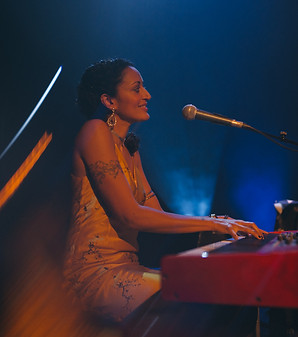
Rosabella Gregory, singer, songwriter, composer
“A thoughtful libretto is the result of firsthand experience, expansive imagination, thorough research, and careful consideration of the presence and execution of music within the world we’re building. But we can only accomplish so much in our own heads, and you are that missing link. Read the libretto several times first, independently of the score. If anything is unclear or uncomfortable, reach out to your living writers! We greatly appreciate these questions, and we can often provide additional resources to support your preparation.”

Rachel J. Peters, composer & librettist
“Credit the librettist! And support us in our industry-wide efforts to be credited as equal collaborators with the composer.”

Deborah Brevoort, librettist and co-chair, Dramatists Guild Opera Committee
“A composer-librettist collaboration is an equal partnership, and in the best cases a true marriage of visions for your opera. Trust each other, lean on each other, respect each other's artistry and work. If there are creative disagreements, don't try to assert yourself, but look for solutions you hadn't thought of before. There's no "I" in NEW OPERA!”

Theo Popov, Composer, Sommelier, Thereminist
“My advice is, when possible, let words and music evolve side by side – not locked together, but not so far apart that they can’t inform one another. If a shared musical language emerges early on, the work shifts from a solitary, uncertain effort into a synergistic, creative dialogue. I’m fortunate that my twin sister is my collaborator: we often intuit each other’s intentions, and because she composes and records at lightning speed, I can draft scenes while immersing myself in her orchestrations – building on her impulses as she builds on mine.”

Dina Gregory, lyricist, librettist, storyteller
Since Connie writes her own text and compositions, we asked what advice she’d give creatives and directors to work together well.
“I think the most important thing when working with a director is maintaining very open and frequent communication. Both creatives should be able to express their honest ideas and reflections on a piece (even if they don't always agree) and that will ultimately lead to a more refined final product. Sometimes it can be easy to get attached to a certain vision that you have for your work, but you should try to be flexible - you are collaborating with a director specifically for their artistic expertise, so don't ignore it!”

Rosabella Gregory, singer, songwriter, composer
Connie Harris, writer, composer, performer

Ann Marie Wilcox-Daehn
NOA Now, Editor
Professor of Voice and Opera, Missouri State University adaehn@missouristate.edu